Archive for the ‘News’ Category
Pas D’Tes Affaires
The National Theatre School of Canada’s Official Student Zine | Poetry, Prose, Photos, Drawings, Silkscreens and More
Read the magazine
Plays to go: Festive Readings
Do you have a passion for theatrical discoveries or looking for a particular work? The Bleviss Family Library has over 100,000 plays in English and French from around the world, including nearly 6,000 unpublished texts, a remarkable collection of books on costume and fashion, and a large number of press releases on artists who make theatre here and abroad.
A few classic and contemporary Christmas reading suggestions from the library.
The night before Christmas, by Anthony Neilson
From one of in-yer-face foremost playwright, comes this hilarious one-act play where Miracle on 34th street meets South Park’s comical irreverence: quite the opposite of family-friendly fare. In a London warehouse, two men stop an intruder who is convinced that he is an Elf and must be freed in order to rejoin Santa and save Christmas. Things escalate quickly about promised Power Rangers, ex-wives and Christmas Spirit special powder. Everyone’s sanity is under pressure at this time of year…

Raven Bonniwell, Dylan Meyers, Jared Mason Murray, and Nathaniel Mendez in The Night Before Christmas by Anthony Neilson, performed at Theater Alliance in 2012. Photo credit: C. Stanley Photography
A Civil War Christmas, an American musical celebration by Paula Vogel
Pulitzer-Prize winner Paula Vogel brings us this ambitious drama filled with hymns, holiday music and spirituals of the period, showing the United States in one of their darkest episodes. The play presents us both fictional and historical characters, alive with crisp and elegant dialogue. Set on a chilly Christmas Eve, it taps into seasonal themes of community and hope with humour and heart.
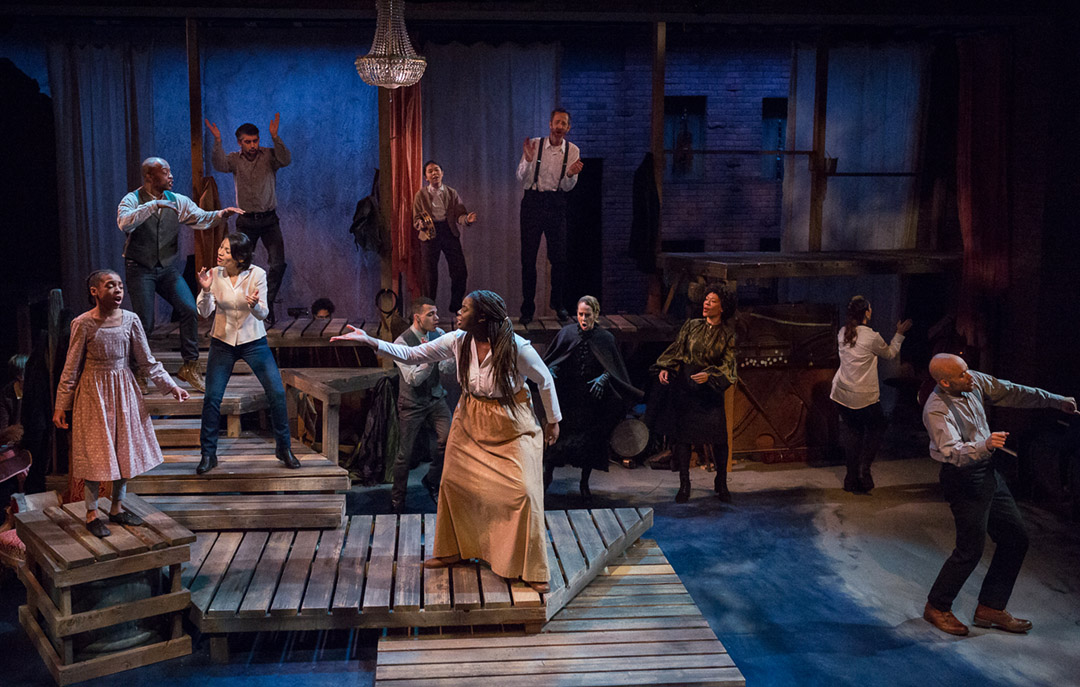
The cast of A Civil War Christmas at Artists Repertory Theatre, photo by Owen Carey, 2016
The patron saint of Stanley Park, by Hiro Kanagawa
Hiro Kanagawa gives us a rollicking sci-fi adventure for kids at Christmas. Brother and sister Josh and Jennifer are coping with the disappearance of their father the year before. Instead of going to their relatives as their mother had planned, they set out to Stanley Park to have a ceremony to honour their father’s memory. But the weather becomes a terrifying Pineapple Express and the children are rescued by the “displaced” Skookum Pete, who brings them to a fantastic bunker (complete with his Christmas Spirit Processor!) There, the children undergo a journey about coming to terms with their dad’s passing. As the playwright himself puts it in the introduction: this play is a Christmas love letter to all children and their families and to the jewel of a park that crowns the city of Vancouver.
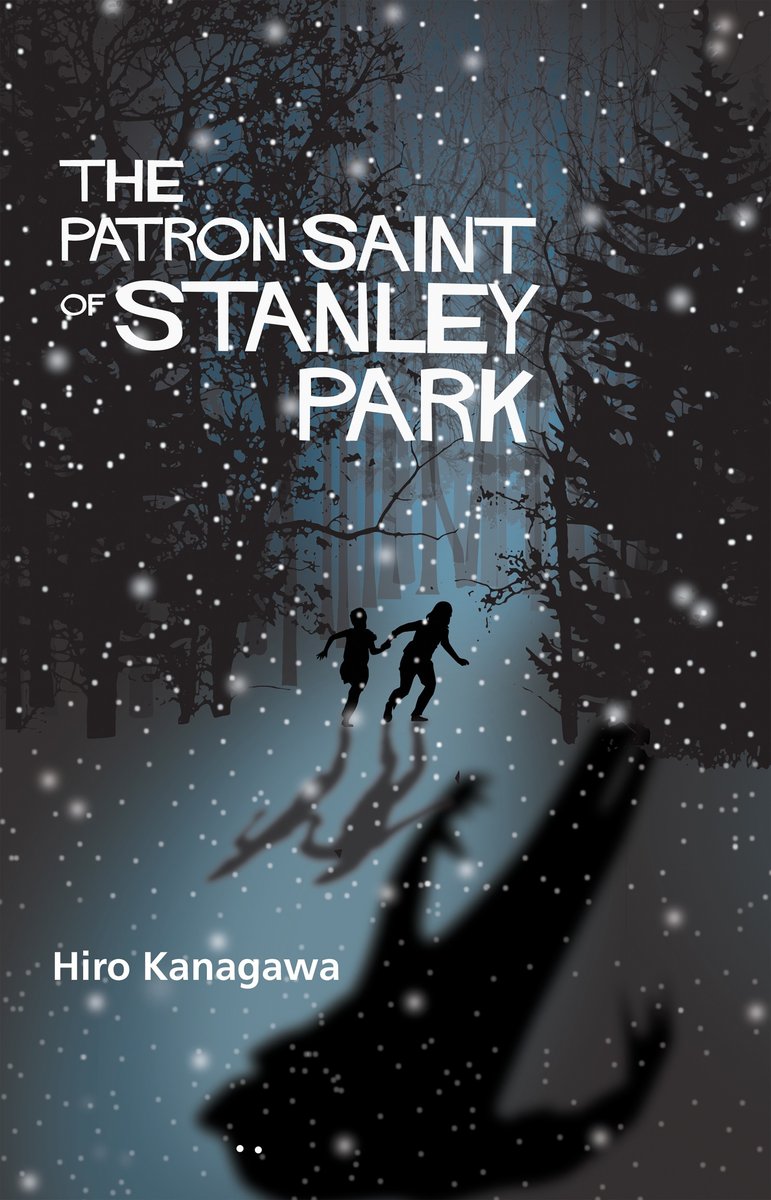
The patron saint of Stanley Park by Hiro Kanagawa, Playwrights Canada Press, 2014
A Norm Foster Christmas: Ethan Claymore’s Christmas, Dear Santa, The Christmas Tree and Bob’s your elf
A collection of delightful kind and warm-hearted comedies especially for the holidays by one of Canada’s most popular playwrights.
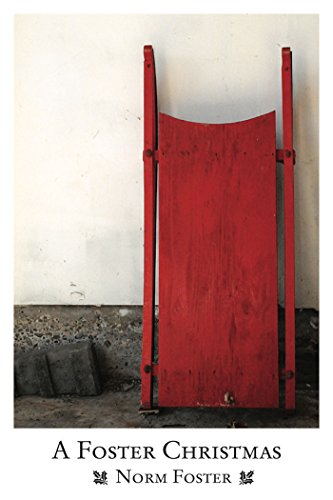
A Norm Foster Christmas by Ethan Claymore, Playwrights Canada Press, 2009

Assistant librarian at the NTS Famille Bleviss Library, Marie-Claude Verdier is responsible for developing its collection and researching for unpublished texts by emerging authors of colour as well as authors from First Nations communities and Inuit and Métis communities.
Subscribe to the newsletter. Never miss a post – they’ll come straight to your inbox!
Discover exciting new projects by NTS graduates
We’ve reached out to grads from each of our professional training programs and provided them with micro-grants to carry on whatever artistic endeavours they chose. They’re using this opportunity to create little pockets of awesome all over the country – and beyond!
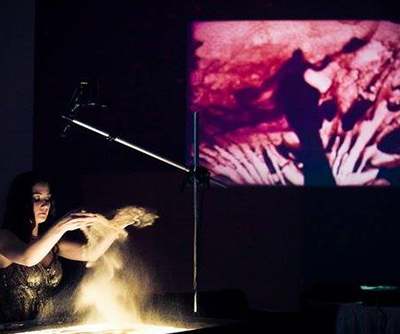
Bruce Lambie (Production Design & Technical Arts, 2015) is bringing his adaptation of an H.P. Lovecraft novella to the stage. This designed staged reading will include shadow puppetry and sand animation projections (pictured below) as well as a full soundscape.
January 11 at MainLine Theatre in Montreal
Alice Abracen (Playwriting, 2018) is taking her play WHAT ROUGH BEAST – developed as her graduating NTS play – south of the border for its U.S. Premiere with The Underlings Theatre Co. in Boston!
January 12-19 at the Boston Playwrights Theatre.
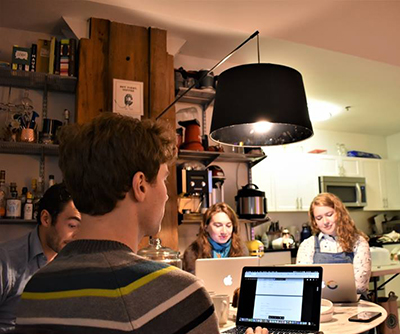
Alexandra Lord (Set and Costume Design, 2015, pictured below) is making sartorial dreams come true! After an online contest, Kanika Ambrose has been chosen as the winner of a free wardrobe consultation in Toronto.
After sorting through the participant’s closet, Alexandra will cut a pattern from a favourite but worn-out piece of clothing, to make a new custom item from the fabric. In the new year, it will become a favourite item once more.

Déjah Dixon-Green (Acting, 2017) is taking to the streets of Toronto with her video camera to present strangers with a series of statements about racism, where they will have to either AGREE or DISAGREE.
Déjah was inspired to create this video collage after an exercise she led with high-school students who came to see To Kill a Mockingbirdat the Stratford Festival, where she was a cast member.

Judy Wensel (Directing, 2018, pictured below) is launching an artistic experiment to create small micro-performances for tiny audiences of ONE! Now, a friend of hers and a stranger will each receive an INCITATION PACKAGE with an assortment of questions, provocations and simple tasks.
Their responses will serve as Judy’s inspiration in the creation of a tiny performance made especially for them.
The creation and sharing of these Encounters will unfold in Regina in January!
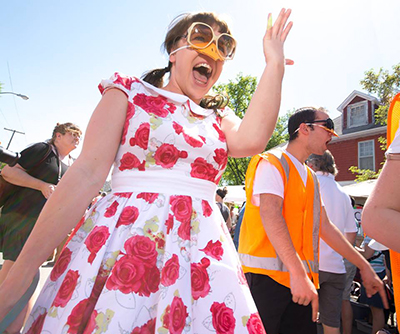
See the projets from the French section’s graduates!
NTS alumni create work that matters. What will YOU do? Reach out to a budding artist today and let them know they should apply to NTS to kickstart their own creative career!
Interview with Ellen Hamilton of Qaggiavuut

NTS is honored to support Qaggiq, an awe-inspiring project aimed at revitalizing Arctic culture and performing arts through training, experience-sharing and empowering partnerships. With the Qaggiq Performing Arts Summit (which brings together 50 artists from Nunavut, the Northwest Territories, Nunavik and Nunatsiavut in Iqaluit) underway, Qaggiq Executive Director Ellen Hamilton talks about the project’s goals and her hopes for Northern communities.
One of the goals of the Qaggiavuut Society is to preserve traditional Northern culture that would otherwise be lost because it is transferred orally, such as songs. How do encourage the transmission of cultural traditions?
Most of the Inuit in Canada are only two generations away from having lived on the land in a traditional way. During the colonization in the Arctic, most of the performing arts were banished or discouraged by those who were colonizing. Because of that, many songs, dances, storytelling and drum traditions were lost. Some elders held on to that knowledge, but we’re now at a time when there are only a few of them remaining.
At Qaggivuut, we think it’s very important for the human culture to preserve the last remaining of these Arctic art forms. So we’re trying to identify elders who remember traditional songs, stories and dances. We match them with an artist in their community who is interested in learning the art form. Through one-on-one mentorship, the elder talks and performs, and the younger person practices with them.
We’re also encouraging Inuit educators to get involved and to learn these pieces of music, stories, and dances, so they can pass it on to the children they work with.
Your mission to preserve traditional art forms also means to inspire artists to create new art within the tradition of Arctic expression. Can you tell me more about this?
We strongly believe that current performing artists around the Arctic need support to move their art forward. That is primarily what the Qaggiq project is about and what we plan to do with the [Arctic Inspiration Prize](https://ent-nts.ca/en/current-events/news/qaggiq-a-project-co-sponsored-by-the-school-was-honored-at-the-arctic-inspiration-prize/?not-mobile=yes).
The first thing we’re doing is to find out who the artists are, where they are, and what they do – we call this step “culturally mapping”. Then we want to consult with the artists to find out if they need any support or training in order to move forward.
We think it’s very important that everything we undertake in Qaggiq is done in a decolonized way. So we don’t impose anything on artists, rather we consult with them, and ask them what they feel is the best way to support them without controlling them.
How is the participation of Canadian institutions, such as NTS, to the Qaggiq project perceived?
We’re really excited about our partnership with NTS and with other institutions in southern Canada. We want to come together as equal partners to learn more about theatre and performance and to share our cultures. We also have partnerships with professional performing artists from the circumpolar world. Arctic artists have a particular vision and a reality that is very important and needs to be respected, but it would be rather shortsighted of us at the Qaggiavuut Society if we thought that we could do this alone in isolation of other artists in Canada and around the world.
How do you envision the specific contribution of the National Theatre School?
Initially, we’d like NTS resources to help us with delivering skills workshops and it’s starting as soon as the Arctic Performing Arts Summit, from March 14 to 19. **Martha Burns** (Instructor at NTS) will be providing support on-site by helping our artists develop skills in acting and performance. We’re also bringing a choreographer from the National Arts Center to provide support, ideas and feedback. We want to do this sort of thing all the time: bring our artists together and have facilitators and experts who join our group and help us.
We have other inspiring ideas for our collaboration with NTS. We’re not sure how they will look, but we’re really excited about building that.
For you personally, why is this mission important? How did you get involved?
I’ve been an educator and a performance artist myself for many years here in the North. Over 30 years ago, I was working in a very small community in North Baffin. I was hired to help build literacy skills. It was very challenging because we had very few resources and none of them were related to the North and to Inuit. We had a terrible record of failure in education, not only in the school system, but also in the adult education field. We’d sometimes have students for two or three years in a program to learn to read and write, and they were failing.
So, almost out of frustration, I was talking to some people in the community and we decided to build a theatre group. We did this in the evening and it was all voluntary.
I still don’t know why I did it, but before we started the play, I gave a literacy test to everybody in the theatre group, and everybody scored below a grade 3 level. Then, we did the play, and we got excited. By the time we had finished the play, I was looking for funding to help the group and I decided to give the literacy test again. Everybody was now over grade 7 of literacy in English. I had no idea why, because we were creating an Inuktitut play! I couldn’t figure out how this happened. I later went on to study adult education to find out how this occured. What I realized was the great power of the performing arts to build communications and problem-solving skills, and to motivate people to communicate. That’s all you need to learn to read and to speak well: you just need to be excited about language.

